Single Imbalance Pricing Changed the Math: How Forecasting and Flexibility Now Define Swiss Utility Margins.
Single imbalance pricing has been live in Switzerland since January, and the balancing energy market is opening to aggregated distributed PV. Utilities that build their forecasting and flexibility capabilities now will define the new standards. Those that wait will pay for it, literally.

A structural shift in Swiss balancing economics is already underway. Since 1 January 2026, Switzerland operates under a single-price mechanism for balancing energy. Every megawatt-hour of deviation is now priced at the full system imbalance cost, and balance groups that actively support the control-area balance are rewarded, while those that burden it pay accordingly. For a utility, that exposure spans the entire balance-group position: regulated (basic-supply) and free-market client portfolios alike, on both the load and generation sides. Distributed PV is the sharpest driver of the volatility behind it. Switzerland's installed PV capacity is now near the 10 GW mark, solar is on track to cover around 17% of net electricity consumption in 2026, and a single solar surge caused a 1.4 GW imbalance event in April 2024. But the question for a utility is broader than any single forecast: it is whether the whole portfolio can be balanced actively across the spot and ancillary-services (SDL) markets. At scale, getting that position wrong is no longer a rounding error.
A second, distinct development is now underway: the balancing energy market is opening to aggregated PV. Commercial and industrial PV systems, as well as rooftop installations on apartment buildings, can now participate via aggregated VPP structures, fully remotely, without additional hardware, and primarily as downward (curtailment) flexibility. Swissgrid's ancillary services procurement costs were at over CHF 450 million in 2024 and have since stabilised at around the CHF 230 to 350 million mark annually, reflecting a market that has matured rapidly but remains substantial. The barrier to participation is not regulatory; it is operational. Aggregating distributed assets, submitting accurate bids, and meeting Swissgrid's response standards requires robust, precise software infrastructure that most utilities have not yet built. The first commercial offerings have already launched.
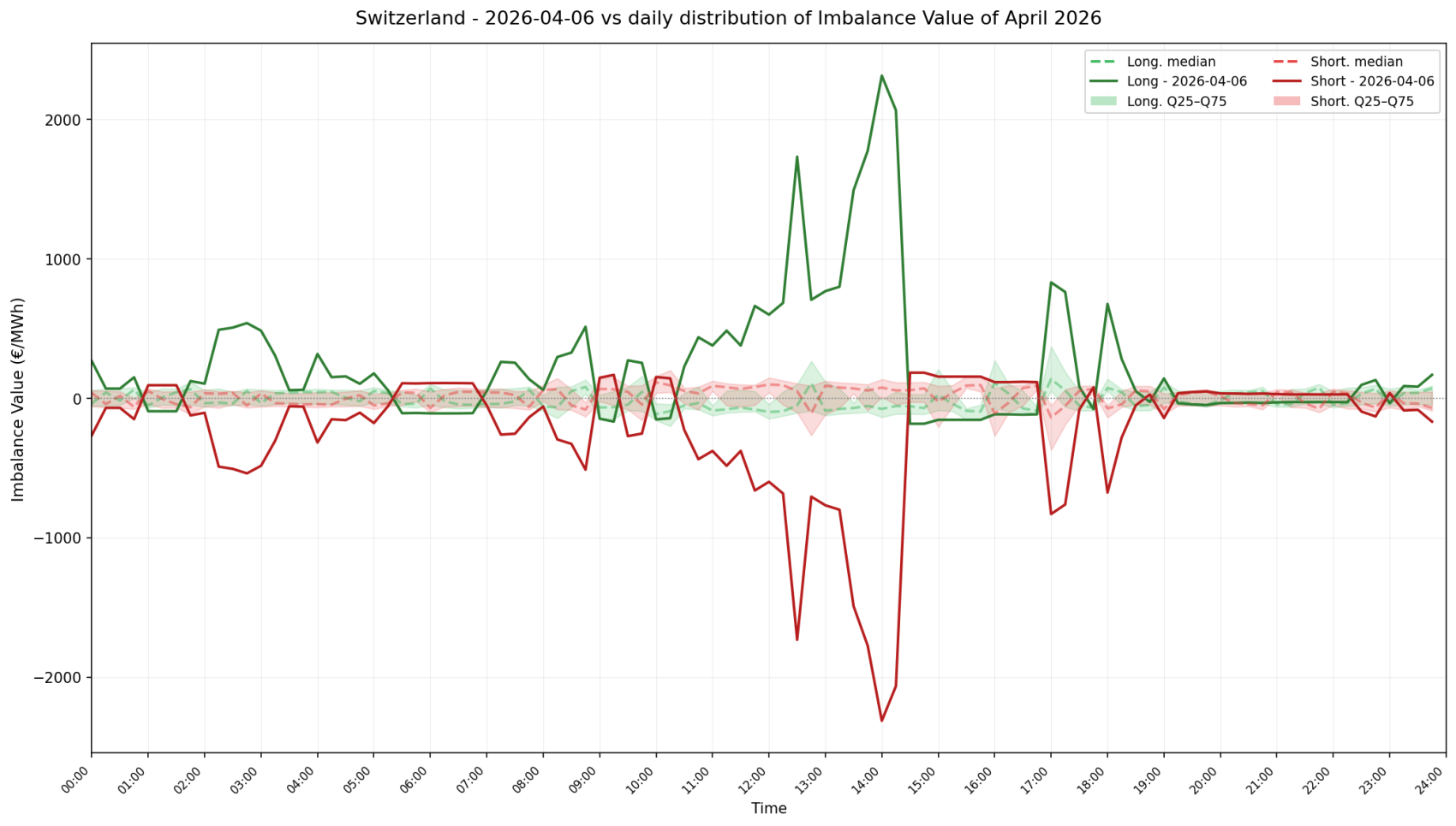
This is where accurate forecasting changes the economics. Under single imbalance pricing, forecast errors translate directly into P&L exposure. Applied to portfolios measured in TWh, even marginal deviations become material line items. The stakes are already real: in April 2026, being on the wrong side of balance exceeded €2,300/MWh in several 15-minute settlement periods. A long BRP paid it; a short BRP collected it. The difference was forecast quality. Tilt Energy's AI forecasting models have delivered up to a 30% reduction in forecast error (WAPE) and a five-fold reduction in large errors compared with conventional approaches. This translated into up to a 20% reduction in energy procurement costs on some client portfolios.
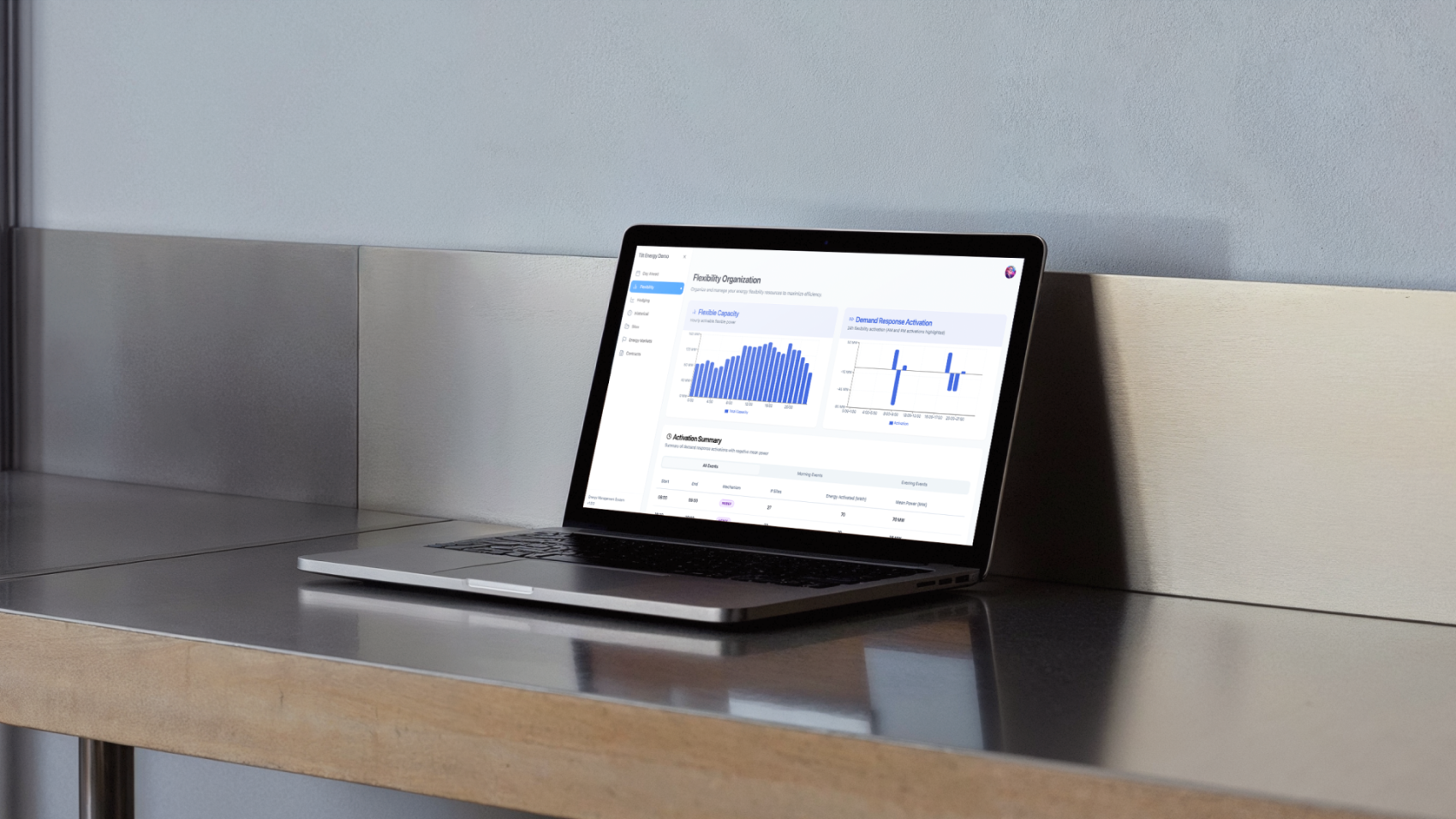
The VPP becomes the operating infrastructure for all of this. A software-based VPP that orchestrates PV, BESS, EV and HVAC assets in real time, submits spot and SDL bids through the utility's own market access or via a BRP partner, and dispatches to assets within Swissgrid-mandated timeframes is the core infrastructure a Swiss utility needs to participate credibly in the flexibility economy.
With more than 630 distribution system operators across Switzerland, aggregation means navigating a uniquely fragmented grid landscape. This is not a market where a generic European platform deploys out of the box. Tilt Energy builds and operates this infrastructure for utilities across Switzerland and Europe, combining AI forecasting, flexibility orchestration and VPP aggregation in a single platform, and integrating via direct APIs into existing OEM and EMS infrastructure without requiring utilities to replace their operational systems. In Switzerland, this is already operational through an EV-optimisation VPP with EKZ, coordinating electric vehicle charging as a flexible grid resource within the Swiss market framework.
The window is open now. Single imbalance pricing is live, and the balancing energy market is opening to aggregated distributed PV. The utilities that build these capabilities over the next 12 to 24 months will set the benchmarks others spend years trying to match. The first movers are already in the market.
Meet Tilt Energy's Swiss market team at Powertage 2026, booth 4.F48, to discuss your flexibility roadmap and how our platform integrates into your existing trading and operational setup. Book a live VPP demo at the stand.